
Decisions gives you the tools to capture work wherever it lives today, understand what your documents actually contain, and turn all of it into structured, automated, governable workflows.

In most organizations, work lives in the wrong places—tribal knowledge, outdated PDFs, and buried emails. Key documents remain unstructured and disconnected from workflows, driving hidden costs and leaving no clear view of how work actually flows.

Tasks and activities scattered across platforms and stakeholders.

Workflows that are hard to map, with many invisible spots.
Decisions gives you one platform to capture all work—scattered, unorganized, in random places—make sense of it, and automate it end-to-end.
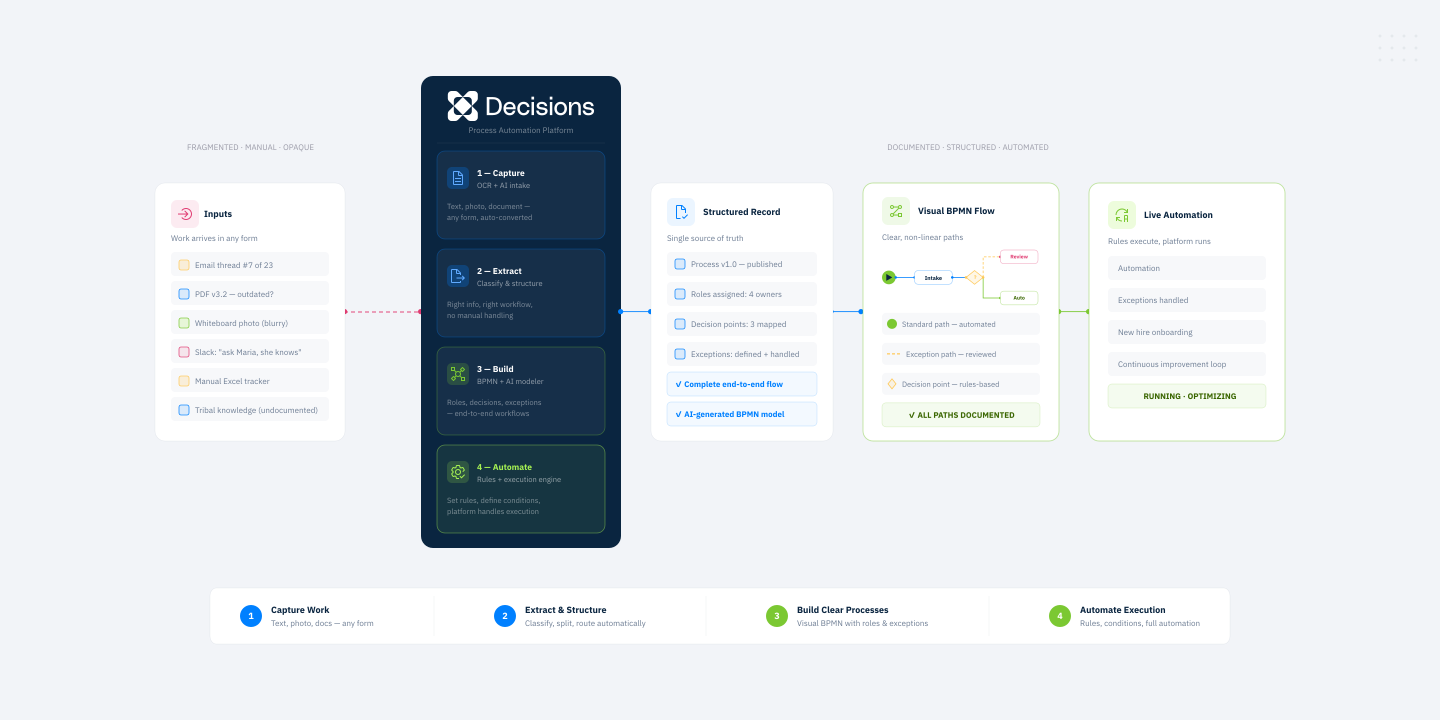
Undocumented processes slow work down and make it fragile. Decisions gives your organization a documented foundation that makes work consistent, traceable, and ready to improve — across every team, every location, and every process that matters.

Capture how work is done so it stays with the company, not with individuals.

Give new team members documented processes they can follow from day one.
A unified platform designed to run your business—No silos, No handoffs, No guesswork.








“Decisions makes development very easy and very visual and thus self-documenting. Decisions offers much more functionality than rules - flows, forms, integrations, etc., that make it possible to completely encompass business logic within, and implement complete working 'code' modules without code... Because Decisions is a visual designer, it's easier to visualize changes, have confidence in them, and unit test individual components.”

Business process documentation is the practice of capturing how work flows through your organization. Without it, processes live in people's heads, get executed inconsistently, and become impossible to audit, improve, or automate. A well-documented process is the foundation everything else is built on: compliance, training, operational consistency, and automation readiness.
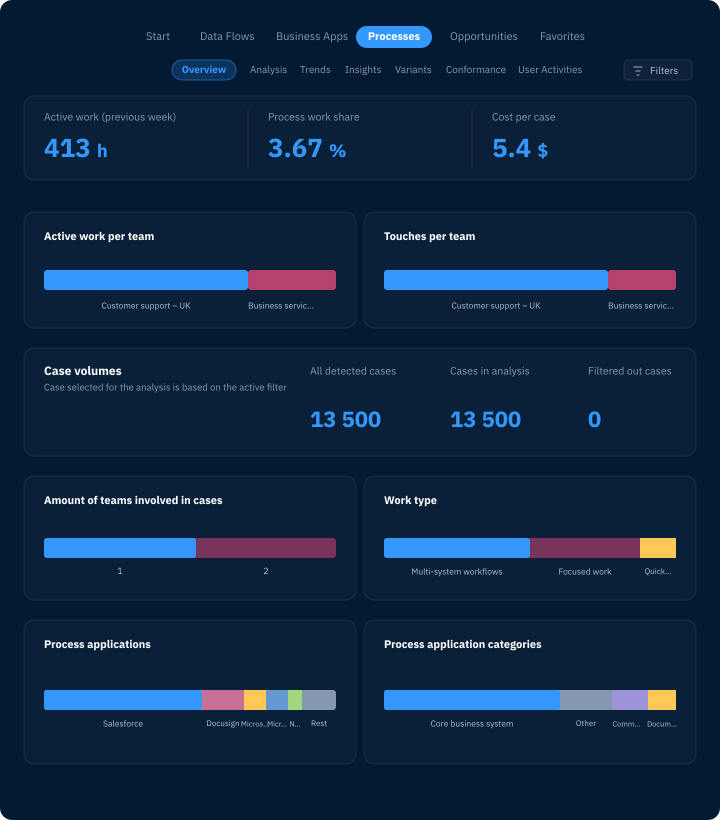
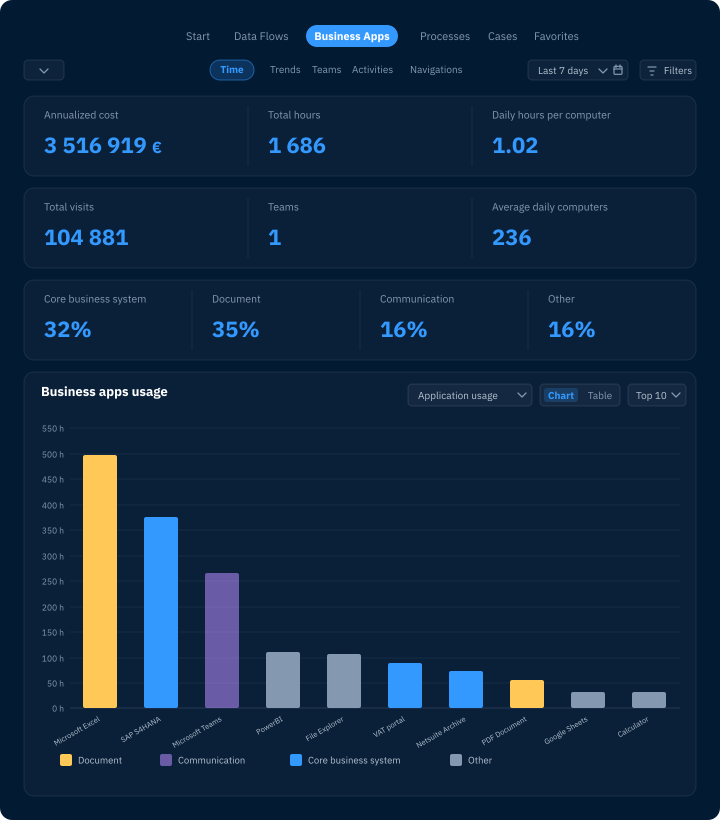
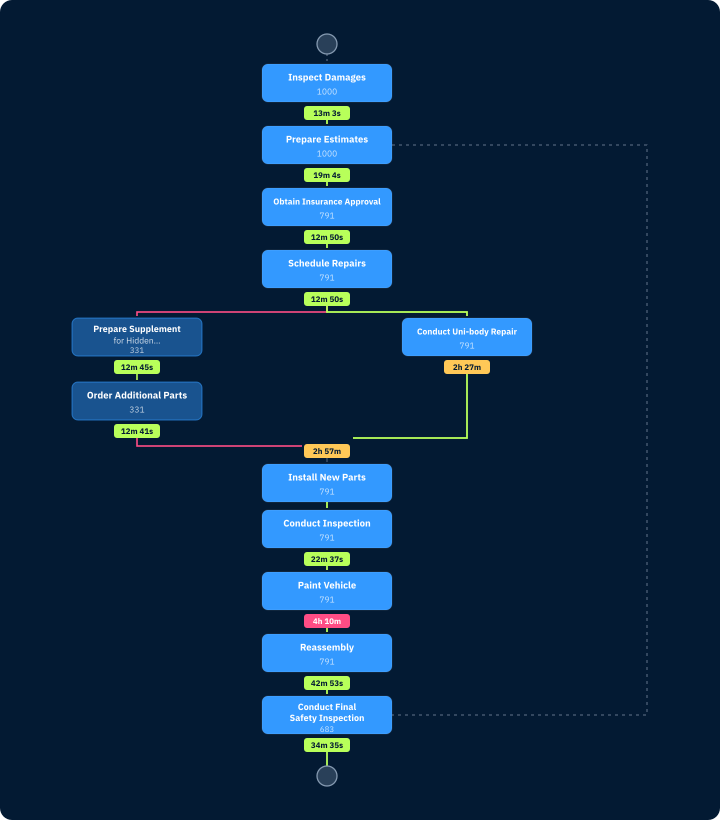
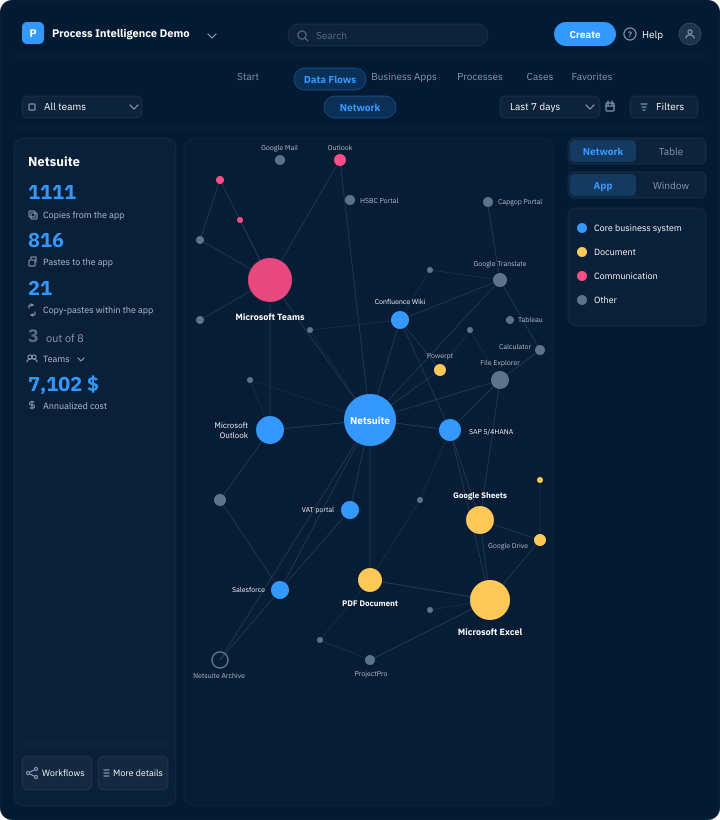
The most effective approach starts with capturing how work actually happens — not how it was designed to happen. Process intelligence takes this further: by analyzing how work is actually flowing through your systems, it surfaces the steps, bottlenecks, and variations that never make it into a manually drawn process map — giving you documentation that reflects reality. Based on those insights, you can generate a structured process map and document your processes automatically.

Knowledge that lives with people, not with the organization.

Standardize how work runs so every team executes the same proven path.

Surface gaps and mistakes early, while they are still cheap to fix.

Automate with confidence on top of processes that are already documented.

Measure, refine, and improve documented processes over time.
Process mapping is one output of process documentation — the visual diagram that shows how work flows. Process documentation is broader: it includes the map, but also the roles, the rules, the exceptions, the inputs and outputs, the compliance requirements, and the version history. A process map shows you the shape of work, while process documentation gives you everything you need to understand it, govern it, and hand it off.
Automated document processing uses OCR and AI to handle incoming documents — invoices, contracts, forms, applications — without manual intervention. When a document arrives, the platform reads it, identifies what type of document it is, extracts data from the PDF or image, validates it against your rules, and routes it into the right workflow. What used to require someone to open, read, and manually enter data from every document becomes a step the platform handles on its own — faster, more accurately, and with a full audit trail.
No. Most organizations that implement Decisions start with processes that have never been formally documented. The platform gives you multiple ways in: describe the process in plain text and AI generates the diagram, import an existing procedure document and the platform structures it, photograph a whiteboard and OCR converts it, or let process mining and process intelligence discover how work is actually happening in your systems and build the documentation from there. You start where you are. The platform handles the rest.