
Decisions gives you one low-code platform to connect, orchestrate, and control data, processes, and AI agents across your entire tech stack—visually, flexibly, and at scale.

Most enterprises have plenty of integrations. The challenge is making those connections work together across people, systems, policies, and AI-enabled actions.

One-off integrations multiply fast. Each new API, service, queue, or database connection adds maintenance, dependencies, and hidden failure points.

Data may move between systems, but the rules that decide what happens next often live in code, spreadsheets, tickets, or tribal knowledge.

When integrations run across cloud, on-prem, legacy, and AI systems, it becomes harder to see failures, enforce policies, and prove what happened.

Decisions does more than move data. It coordinates the workflows, rules, approvals, and actions that determine what happens after systems connect.

Apply decision logic directly to integrated processes, so policies, validations, routing, and exceptions are enforced consistently across systems.

Business and IT teams can design visually while maintaining permissions, versioning, testing, governance, and deployment oversight.

Connect cloud, hybrid, on-prem, legacy, and modern systems without forcing the business to rebuild around a single application architecture.

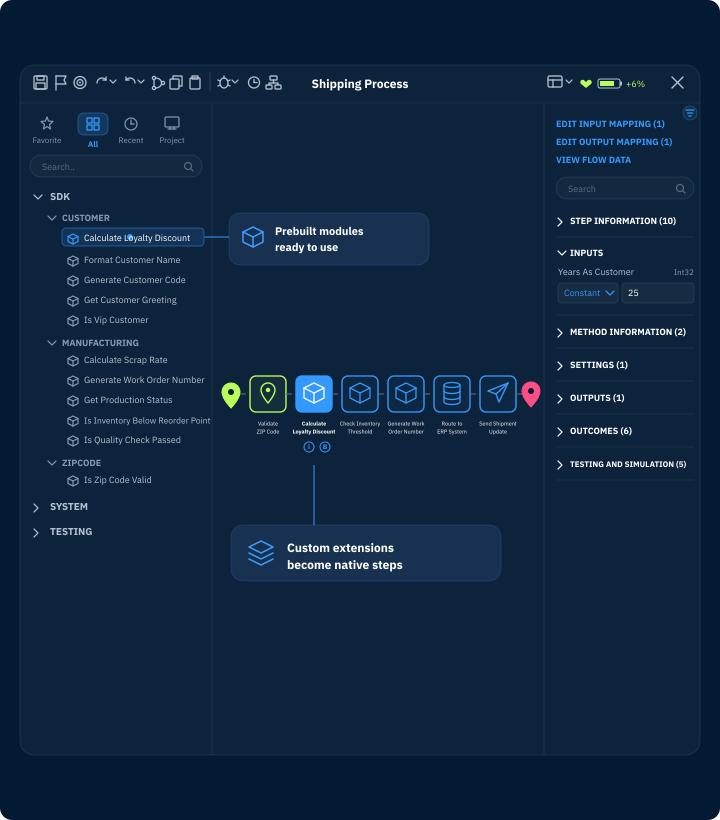
Create integration steps, data mappings, rules, and workflows once, then reuse them across applications, departments, and process variations.

Capture what ran, what changed, who acted, which rules fired, and how data moved across each connected system.
Decisions combines integration, rules, workflow, and monitoring so teams can build reusable connections and orchestrate end-to-end processes from a single platform.
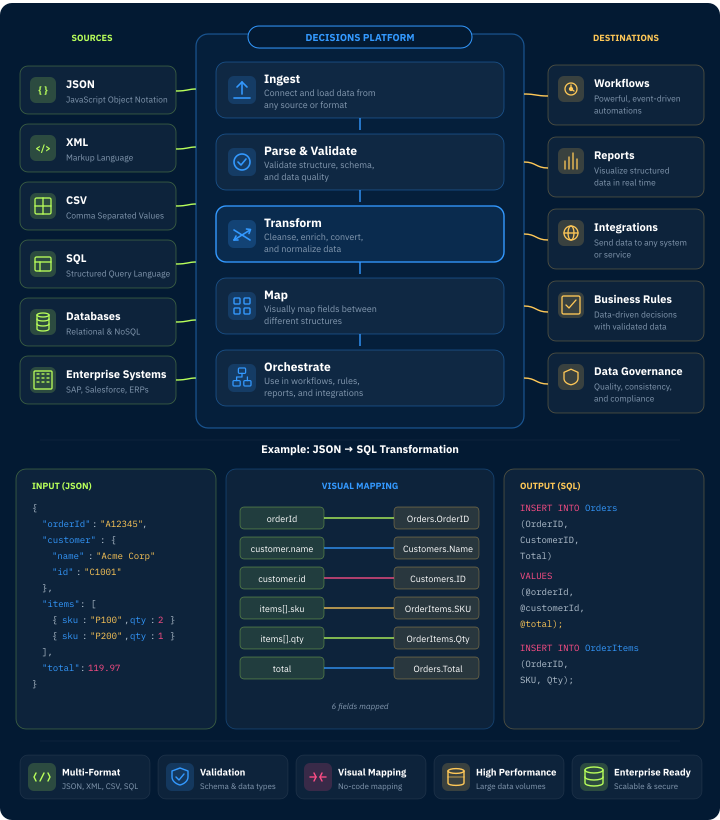
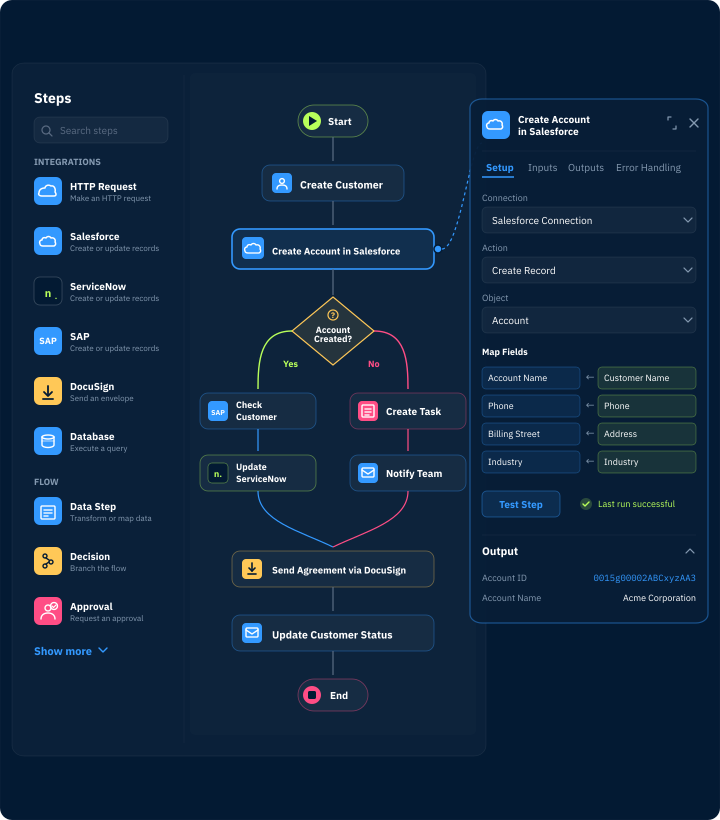
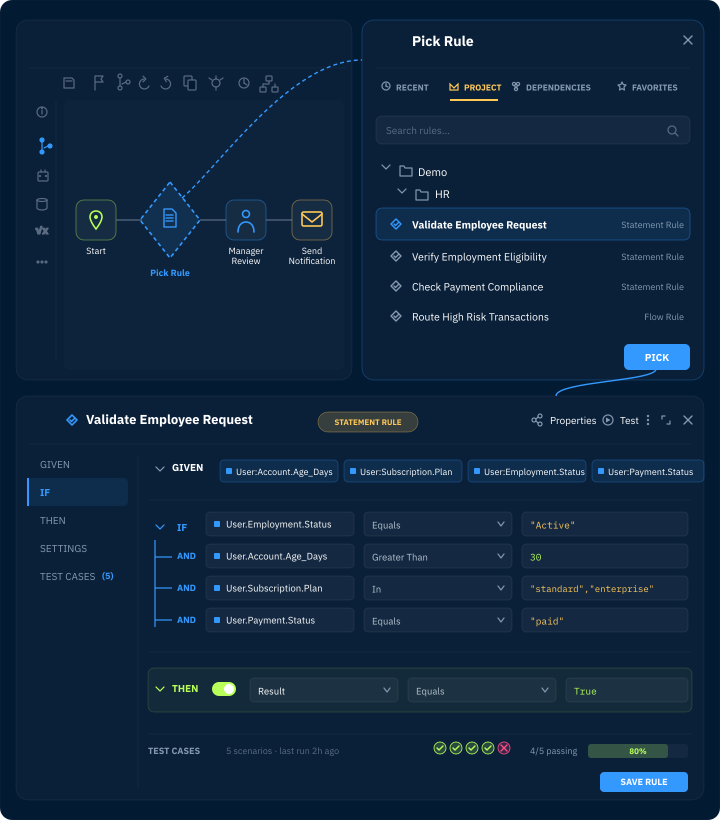
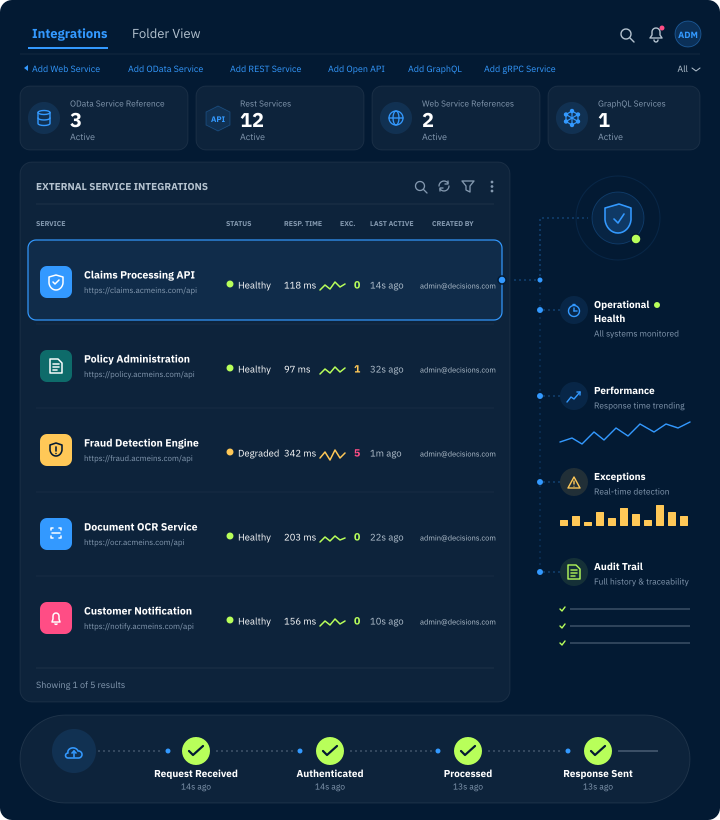


View the Decisions Integrations data sheet to see how Decisions connects applications, databases, APIs, and legacy systems—helping teams reduce silos, enforce data integrity, and orchestrate work across the enterprise.
Connect faster with out-of-the-box integrations across systems you already use. From core platforms and databases to RESTful APIs, RPA tools, and messaging systems, Decisions makes it easy to unify your tech stack.
Categories
Connect APIs, databases, events, services, and AI tools in governed workflows that move work across your business.
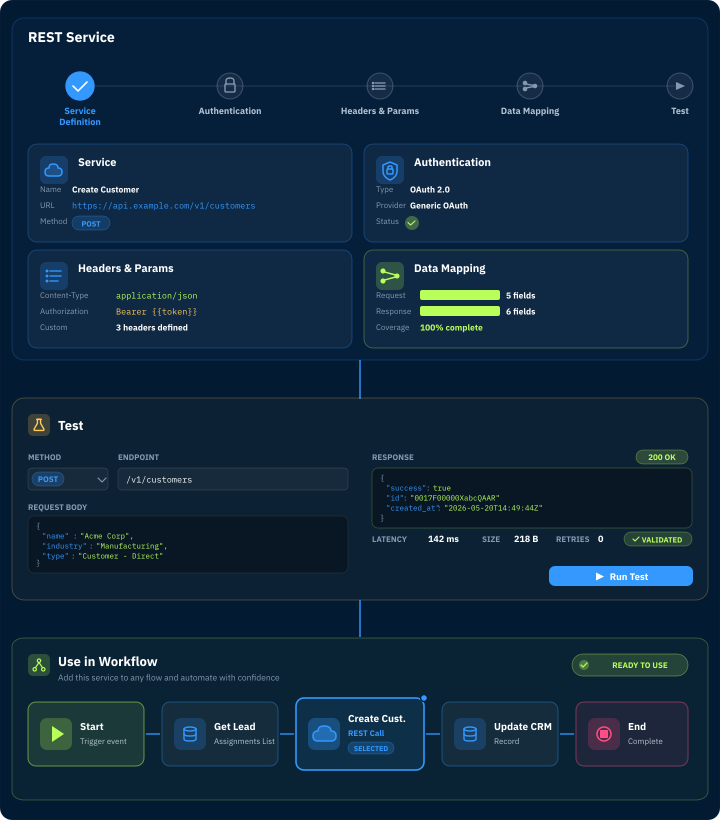
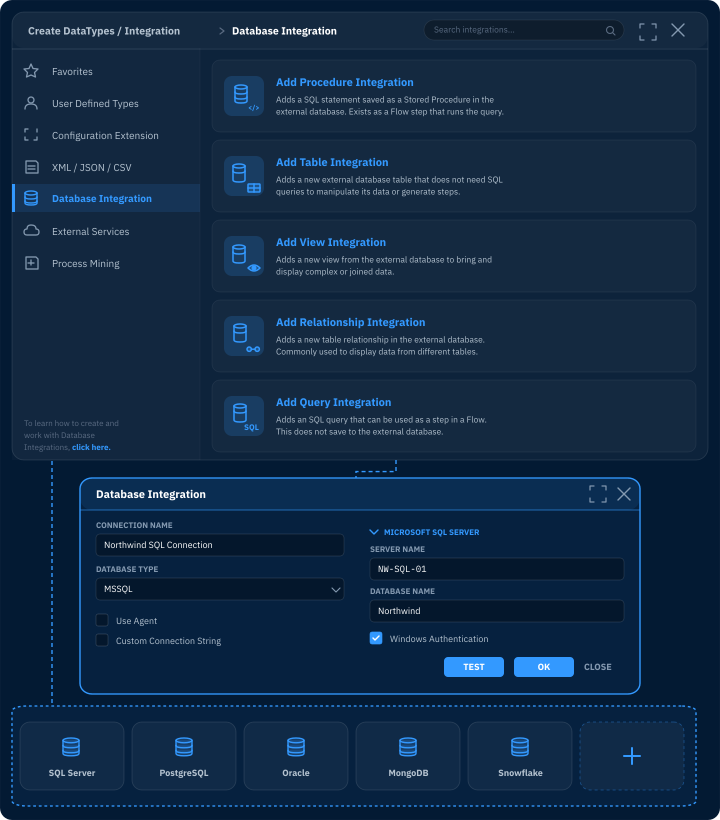
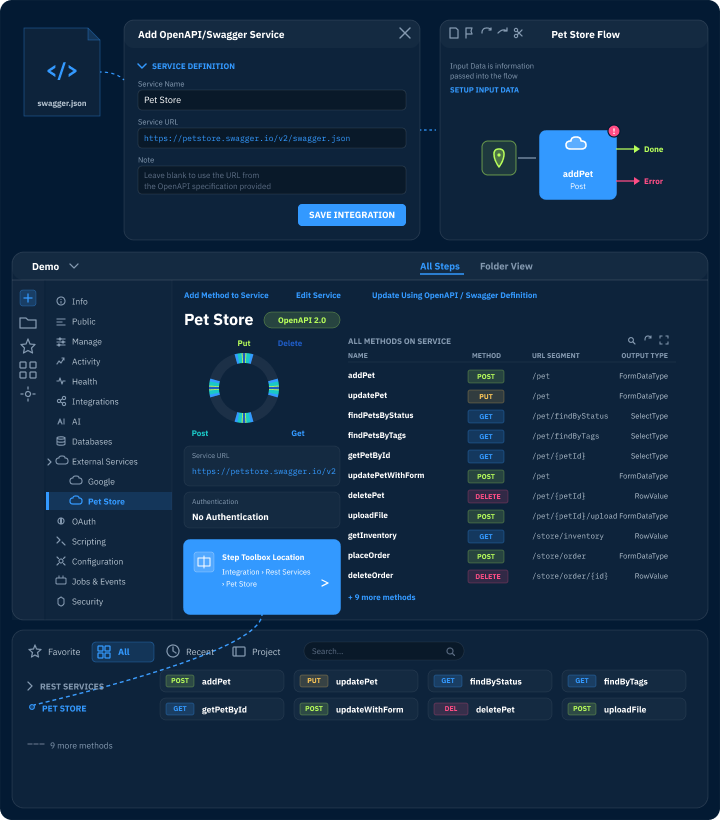


An integration platform connects applications, data sources, APIs, and services so information can move between systems. Decisions goes further by adding workflow, rules, governance, and monitoring to coordinate what happens next.
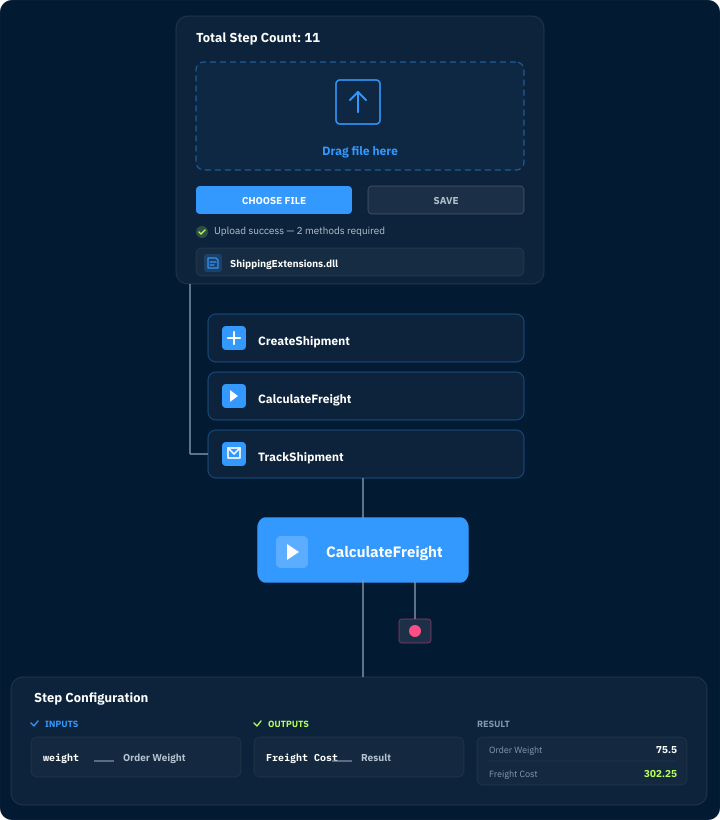
Decisions can integrate with REST and SOAP services, databases, webhooks, message queues, enterprise applications, cloud services, AI platforms, identity providers, and custom systems through modules and SDK support.
Yes. Flows can be made available as REST services, allowing external applications to send data into Decisions and receive outputs after the workflow, rules, or process logic runs.
Teams can configure reusable integration steps, service calls, data mappings, and rules visually instead of building every connection from scratch in code. Developers can also extend the platform with SDK-based connectors when needed.
Decisions centralizes permissions, rule logic, versioning, testing, monitoring, alerts, and audit trails so teams can see and control how data and actions move across connected systems.

See how Decisions helps you unify applications, data, APIs, services, and AI tools through governed orchestration from one platform.