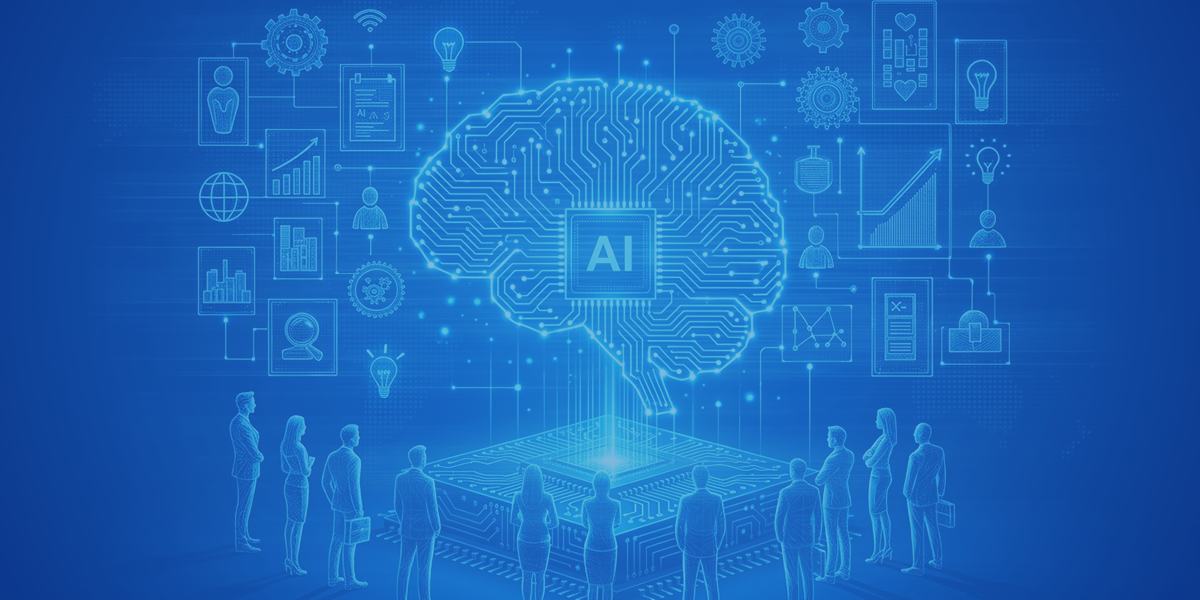
The days of Artificial Intelligence (AI) as science fiction are over. Today, AI has moved in and made itself at home, thanks to Alexa and Google Home. But in businesses, AI has a much more comprehensive range of usefulness. AI has infiltrated virtually every business process in every industry out there. In 2016 the global Artificial Intelligence market was around $1.4 billion. By the year 2025, AI is expected to be approximately $60 billion. AI can increase business productivity by at least 40%. In today's world, it has become imperative for companies that want to maintain a competitive edge to adapt AI into their daily business processes.
- Improve Customer Experience
Businesses are using AI to improve marketing, sales, customer relationships, and communications. AI is also used to acquire customer insights and information that gives businesses a competitive edge. AI capabilities are being built into the software that companies can use to create customer-centered improvements. Chatbots are the perfect example. Improved chatbot automation produces smart insights on how your business can efficiently assist your customers. By 2020, 85% of customers' relationships with business enterprises will be managed without human involvement.Companies such as Microsoft, Google, and Salesforce have already integrated AI-powered tools for small and medium-sized businesses. These companies promise a cost-effective way for businesses to get in on the AI revolution. The AI-powered tools are entirely customizable to the needs of the business without sophisticated programming knowledge.
- Improve Business Processes and Efficiencies
AI has already begun to impact the back-end business processes, financial management, and communications for businesses. AI can also streamline human resources and recruiting with customized questions for interviewers, find broader sources of candidates, gather interview data and analysis, as well as tracking and expedited learning and improvements.The future of AI will see it growing in influence as it evolves along with other components of the future generation of technological advances, including 5G, IoT, the cloud, mobile-connected devices, robotics, and autonomous driving.