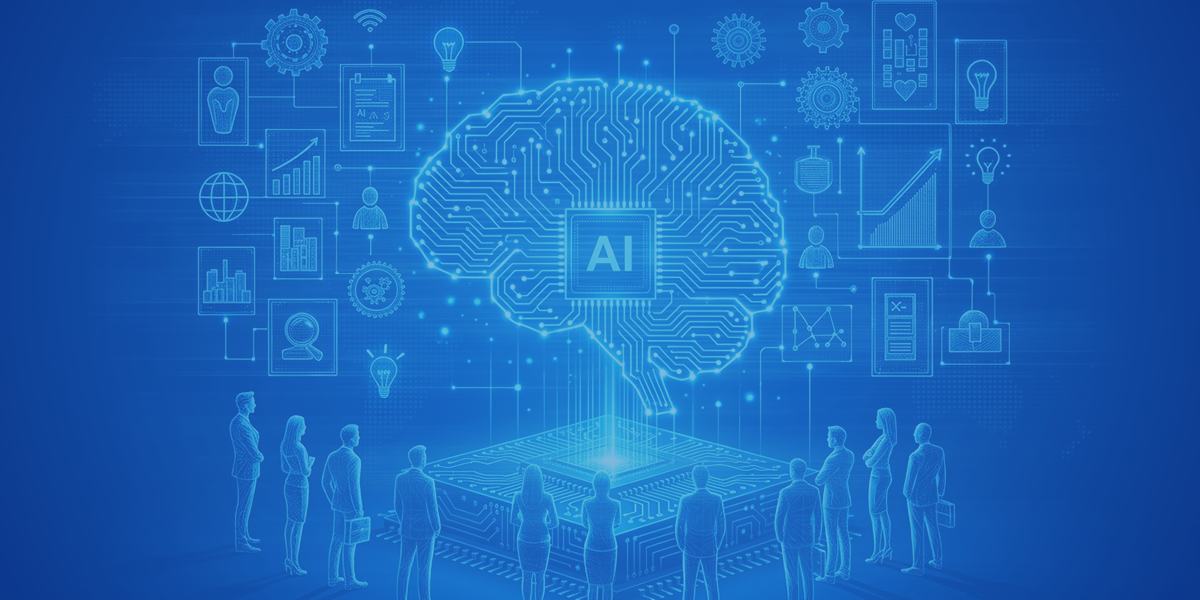
“The future is already here — it’s just not very evenly distributed,” said William Gibson, an American-Canadian pioneer of the cyberpunk fiction genre. This is especially true of robots in the workforce. For some industries, like manufacturing and automotive, robotics has been present as early as the 1960s. For others, robots are just beginning to change the way work is accomplished. In this article, we will explore the key differences between robots and the technology powering robotics, the industries experiencing a revolution, and what the future of work will look like alongside robots.
Robots versus Automation versus AI
Commonly misunderstood, the definitions and capabilities of robots, automation, and artificial intelligence (AI) are different from one another. For one, robots are the physical hardware, the “shell”, that is powered by automation or AI. Automation is making hardware or software capable of doing things automatically without human intervention. Note that automation does not necessarily operate with AI, but it can. An example of automation without AI is UNIMATE, manufactured by Unimation. UNIMATE is the first industrial robot to be used by a major manufacturer. It was installed by General Motors in New Jersey in 1962. AI, on the other hand, is a broad umbrella term that encompasses technologies that mimic or predict human behavior through intelligent agents. AI mostly refers to machine or deep learning today. These subsets of AI can “rewrite” their own programming to make decisions based on the data collected in the environments around them.
The Industries most affected by robots
There is mounting research suggesting that robots will augment or replace jobs entirely in the near future. Over 30 million Americans will lose their jobs to AI, many of that AI being in robot form, according to a new report by the . Right now, these are the six industries that are being revolutionized by robots: